
The New Search Landscape: Beyond the 10 Blue Links
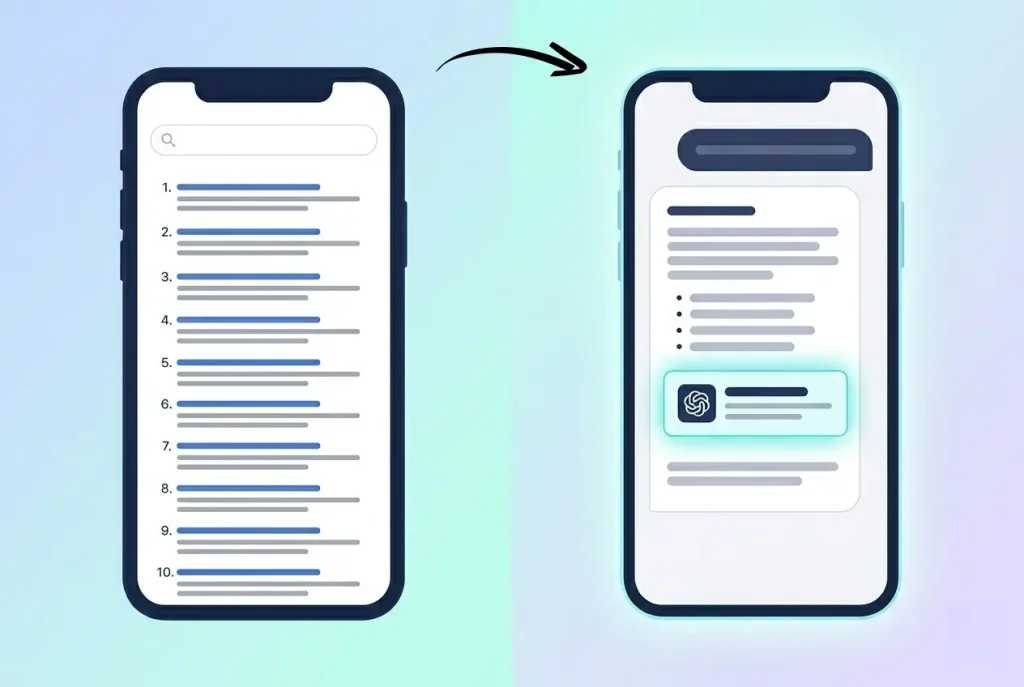
Traditional Google search presents users with a list of ten clickable results per page—the famous “10 blue links” that SEO professionals have optimised for over two decades. But today, when someone asks ChatGPT “What’s the best plumber in Hawthorn?” or uses Google’s AI Overview feature to research dental services, they’re not seeing a list—they’re getting a direct, conversational answer with citations buried within the response.
This fundamental shift transforms how businesses need to think about visibility:
- Traditional SEO success: Ranking position #1-3 for target keywords, measured by click-through rates and organic traffic
- AI SEO success: Being cited as the authoritative source within AI-generated answers, measured by brand mentions, citation frequency, and direct conversions
- The critical difference: In traditional search, #1 captures roughly 28% of clicks; in AI search, being the sole cited source can mean capturing 100% of attribution—or being completely invisible
According to recent data from BrightEdge research published in January 2025, AI Overview appearances now impact nearly 15% of all Google searches in Australia, with the figure climbing to 35% for commercial and service-based queries. For local businesses in competitive sectors like dental, NDIS, automotive, and professional services, this isn’t a future trend—it’s today’s reality.
Entity-Based Optimisation: Why Your Keywords Aren’t Enough Anymore
For years, SEO revolved around keyword density, exact-match domains, and phrase targeting. If you wanted to rank for “car mechanic Werribee,” you stuffed that exact phrase into your title tags, headings, and content as many times as algorithm updates would tolerate.
AI search engines don’t work that way. They understand entities—real-world concepts, people, places, and things—and the relationships between them. When Google’s AI or ChatGPT evaluates your content, it’s asking:
- Does this business genuinely demonstrate expertise in automotive repair services?
- What specific entities (brands, services, locations, certifications) does this business associate with?
- How comprehensively does the content cover related topics within the automotive repair knowledge graph?
- What authoritative sources confirm this business’s expertise and trustworthiness?
Here’s a practical example from our work with Melbourne-based service providers. A traditional SEO approach for a plumbing business might target “plumber Hawthorn” with basic location keywords. An entity-based AI SEO approach instead focuses on:
- Entity establishment: Structured data markup defining the business entity, its service categories (emergency plumbing, hot water repairs, gas fitting), service locations, and certifications
- Semantic depth: Comprehensive content covering plumbing subcategories, creating topical authority that AI models recognise
- Contextual relationships: Internal linking structures that demonstrate expertise across interconnected plumbing topics, from leak detection to compliance regulations
- External validation: Citations from trusted Australian industry sources, local directories, and authoritative publications that reinforce entity credibility
This approach aligns perfectly with Google’s E-E-A-T framework (Experience, Expertise, Authoritativeness, Trustworthiness) whilst simultaneously optimising for how AI models evaluate and cite sources.
Ranking Without Ranking: The AI Citation Paradox
Here’s where AI SEO breaks all the rules you’ve learnt: your business can appear as the primary recommended source in ChatGPT, Google’s AI Overviews, or Perplexity—without ranking #1 on traditional Google search results.
Recent research from Authoritas (February 2025) analysed 10,000 AI-generated search responses and found that 34% of businesses cited in AI answers ranked between positions #4-#10 in traditional organic results. Some weren’t on page one at all. So what did these businesses do differently?

The answer lies in answer-worthiness signals that AI models prioritise:
- Comprehensiveness: Detailed, authoritative content that answers questions completely rather than surface-level keyword targeting
- Schema markup: Structured data that helps AI models extract and understand key information quickly
- Content freshness: Regularly updated information demonstrating ongoing expertise rather than static, outdated pages
- User engagement metrics: Signals indicating real visitors find genuine value, including time on page, return visits, and conversion actions
One Melbourne dental practice we’ve worked with demonstrated this perfectly. They ranked #6 for their primary keyword “dentist Richmond” but appeared as the first citation in Google’s AI Overview for “emergency dental care Richmond.” The reason? Their comprehensive emergency services page included detailed FAQs, 24/7 availability information, proper LocalBusiness schema markup, and genuine patient testimonials—all elements AI models weight heavily when determining citation-worthiness.
Reverse-Engineering AI Search Prompts: The New Keyword Research
Traditional keyword research tools like Google Keyword Planner still have value—they tell you what people type into search boxes. But AI search fundamentally changes user behaviour. People don’t type “best dentist near me” into ChatGPT; they ask natural, conversational questions: “I have severe tooth pain and need an emergency appointment today—which dentist in South Yarra can see me immediately?”
To succeed in AI search, businesses need to reverse-engineer the prompts and questions AI users actually ask:
Prompt-matching methodology:
- Question intent mapping: Identify the full range of questions your target customers ask AI assistants about your services, from awareness stage (“What services do NDIS providers offer?”) to decision stage (“Which NDIS provider in Dandenong accepts NDIA-managed funding?”)
- Conversation flow analysis: Understand how AI search conversations develop, with users asking follow-up questions that traditional keyword research never captures
- Natural language optimisation: Structure content to answer questions in the conversational, detailed format AI models prefer for citation
This shift requires completely rethinking your content strategy. Rather than creating thin “service pages” targeting exact-match keywords, successful AI SEO demands comprehensive resources that address the full spectrum of questions potential customers ask.
Schema Markup: Your Shortcut to AI Citations
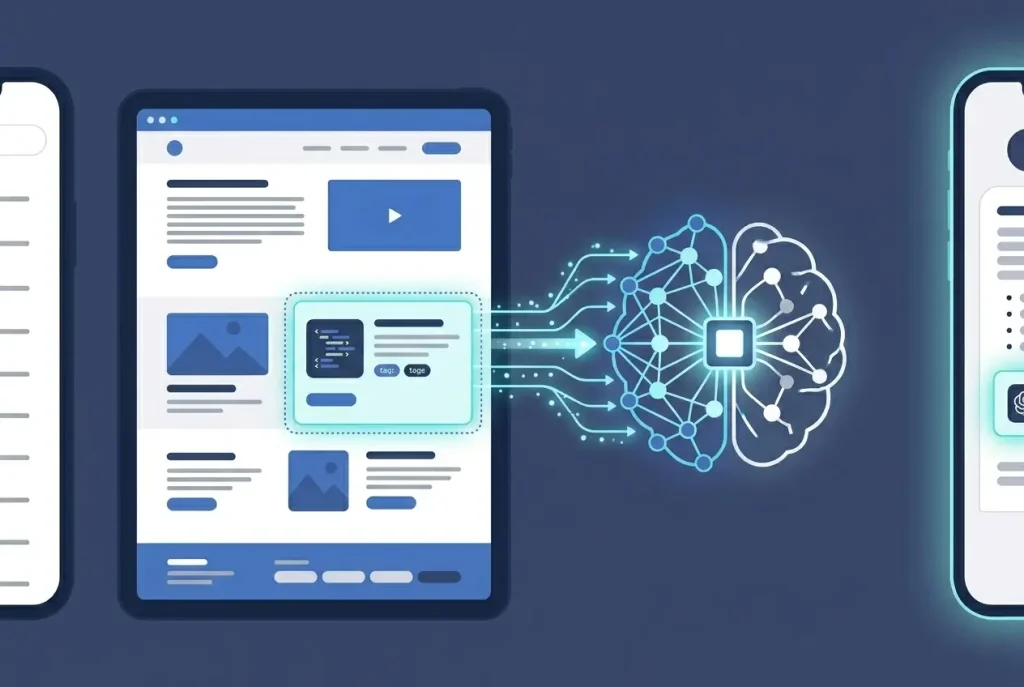
If there’s one technical SEO element that disproportionately impacts AI search visibility, it’s structured data markup. Schema.org vocabulary provides a standardised format for presenting information that AI models can easily parse, understand, and cite.
Think of schema markup as speaking directly to AI in its native language. When properly implemented, structured data transforms your website from a wall of human-readable text into a machine-readable database of facts, relationships, and entities.
Critical schema types for AI SEO:
- LocalBusiness schema: Essential for any service-based business, defining your entity type, service area, operating hours, contact information, and customer ratings in a format AI models readily extract and present
- FAQ schema: Directly answers common questions in a structured format that AI search engines can pull verbatim into responses
- HowTo schema: Provides step-by-step instructions that AI assistants frequently cite when users seek guidance
- Product/Service schema: Defines your offerings with specificity that helps AI models understand exactly what you provide and to whom
- Review schema: Aggregates customer feedback in a trust-signal format AI models weight heavily for local and service-based queries
The implementation quality matters enormously. We’ve audited hundreds of Australian business websites claiming to have “SEO-optimised” schema markup, only to find incomplete implementations, incorrect property usage, or outdated formats that AI models ignore entirely.
Australian Businesses Already Winning in AI Overviews
Theory is helpful, but results tell the real story. Across Australia, forward-thinking businesses have already adapted their SEO strategies for AI search—and they’re capturing visibility their competitors completely miss.
Case study: NDIS provider in Melbourne’s west
An NDIS service provider working with 21 Webs demonstrated the power of AI-optimised content. Despite ranking #4-#7 for primary disability services keywords, their content appeared as the cited source in Google AI Overviews for 23 different NDIS-related queries within four months of implementing our disability provider SEO strategy.
Key tactics included:
- Comprehensive NDIS plan management guides answering 50+ common participant questions
- Detailed service location pages with suburb-specific disability support information
- FAQ schema markup covering funding categories, service delivery models, and eligibility criteria
- Regular content updates reflecting the latest NDIS pricing arrangements and policy changes
The result? Whilst their traditional organic traffic increased by 45%, their conversions grew by 112%—a clear indicator that AI-driven visibility was delivering higher-quality leads than traditional search rankings alone.
Case study: Automotive repair specialist
A European car mechanic in Melbourne’s inner suburbs took a different approach, focusing on technical authority rather than broad keyword coverage. Their automotive web design integrated detailed technical content about specific vehicle makes and models, common fault diagnosis, and genuine parts specifications—all elements that established deep topical authority in AI models’ understanding.
Within six months, searches for “Mercedes diagnostic service Melbourne” and “BMW specialist mechanic near me” frequently cited their business in AI Overview responses, despite competitors with higher domain authority and more backlinks. The differentiator? Comprehensive, technically accurate content with proper schema markup that AI models trusted as authoritative.
Is Your SEO Strategy AI-Ready? The Audit Checklist
Most Australian businesses are still optimising for 2015’s search engine—and wondering why results have stagnated. Here’s a practical checklist to audit whether your current approach aligns with AI search realities:
Technical infrastructure audit:
- Does your website include comprehensive LocalBusiness schema with all required and recommended properties?
- Are FAQ, HowTo, and service-specific schema types properly implemented across relevant pages?
- Is your content structured with clear headings, subheadings, and semantic HTML that AI models can parse?
- Does your site architecture demonstrate topical authority through internal linking clusters?
Content quality audit:
- Do your pages answer questions comprehensively rather than targeting keyword density?
- Is content written in natural, conversational language that mirrors how real people ask questions?
- Do you cover topics in depth rather than creating thin pages for every keyword variation?
- Is information current, with regular updates demonstrating ongoing expertise?
If you answered “no” or “I’m not sure” to more than 30% of these questions, your SEO strategy needs AI optimisation.
The Hybrid Future: Traditional and AI SEO Working Together
Here’s the good news: AI SEO doesn’t replace traditional search engine optimisation—it extends and enhances it. The businesses seeing the strongest results are those implementing hybrid strategies that capture visibility across all search modalities.
A hybrid AI SEO approach includes:
- Foundational technical SEO: Fast, mobile-optimised websites with clean code, proper indexing, and excellent user experience that both Google and AI search engines reward
- Comprehensive content strategy: In-depth resources that satisfy traditional ranking algorithms whilst providing citation-worthy depth for AI models
- Strategic link building: High-quality backlinks that build domain authority for traditional rankings whilst serving as trust signals AI models consider when evaluating sources
- Structured data implementation: Rich schema markup that enhances traditional SERP appearance whilst enabling AI citation
- Local authority building: Strong Google Business Profile optimisation, local citations, and community engagement that boosts both traditional local pack rankings and AI local recommendation visibility
Taking Action: Where to Start with AI SEO
The shift to AI search can feel overwhelming, but the path forward is clearer than you might think. Here’s a prioritised action plan for Australian businesses ready to adapt:
Immediate priorities (implement this month):
- Audit and optimise your Google Business Profile with complete, accurate information across all fields
- Implement basic LocalBusiness schema markup if you haven’t already—this is foundational for AI local search
- Create or update your FAQ page with 10-15 questions customers actually ask, marked up with FAQ schema
- Review your most important service pages for comprehensiveness—are they truly the best resources on their topics?
Short-term goals (3-6 months):
- Develop comprehensive pillar content that establishes topical authority in your industry
- Implement advanced schema types (Service, HowTo, Review) across relevant pages
- Build internal linking structures that demonstrate subject matter expertise
- Create location-specific content for each service area with unique, valuable information
The businesses that thrive in this new search landscape won’t be those with the biggest advertising budgets or the oldest domains—they’ll be those providing genuinely valuable, authoritative, well-structured information that both humans and AI recognise as trustworthy.
Summary
Ready to Future-Proof Your Search Visibility?
At 21 Webs, we’re not just watching the AI search revolution unfold—we’re actively developing strategies that position Australian businesses to win in this new landscape. Our Melbourne-based digital marketing agency specialises in AI SEO optimisation that drives real business results, not just rankings reports.
Whether you need a complete AI SEO strategy overhaul or targeted optimisation to enhance your existing efforts, we’re here to help. Contact us today to discuss how AI-powered search is impacting your industry—and how to capture the visibility your competitors are missing.